Signals and networks
The Spin Glass Machine
Music and brain recordings both fluctuate differently over short and long intervals.
The multifractal spectrum of each recording is matched to one generated by rescaling a model magnet with competing bonds.
The best match places each recording on a map of the magnet’s parameters. In a test with 80 tracks, eight genres fell into two groups.
What does a piece of music have in common with a recording of brain activity? Both contain fluctuations that look different over short and long intervals. The Spin Glass Machine compares that change of scale across recordings.
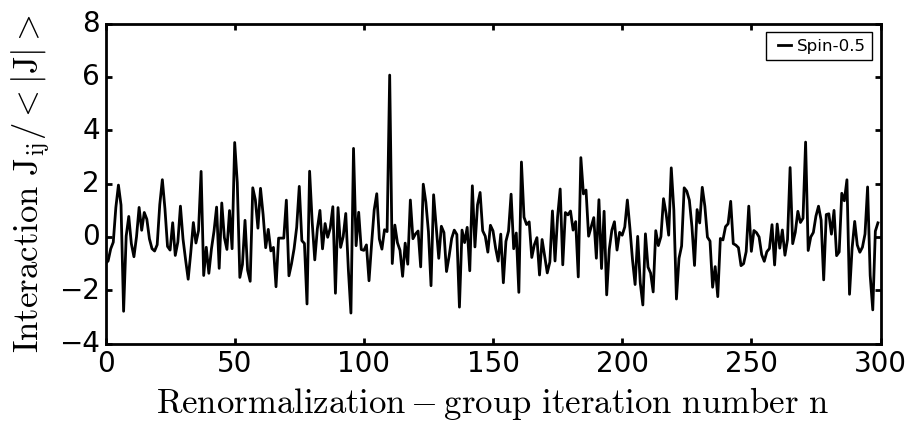
For each recording we measure a multifractal spectrum, which describes how weak and strong fluctuations scale. We match it to spectra generated by rescaling a model magnet with competing bonds. Each best match places a recording on a map whose coordinates are parameters of the magnet.
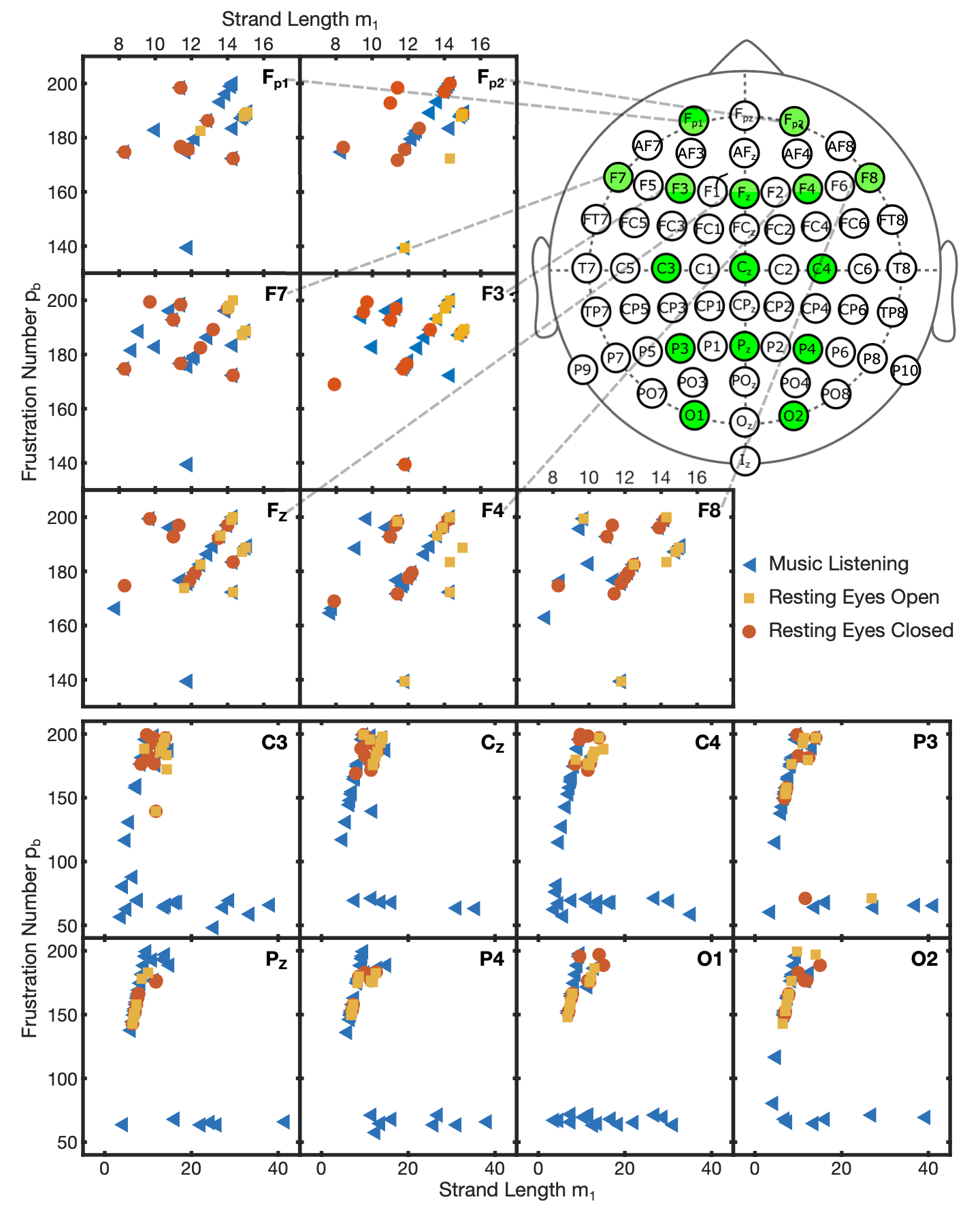
We tried the method on 80 tracks across eight genres. In this collection, Western pop grouped with the Turkish selections, while blues, jazz and Western classical music formed a separate group. In a second test, frontal EEG recordings during listening overlapped more with eyes-closed rest than with eyes-open rest.
Publication
Multifractal Spin-Glass Chaos Projection and Interrelation of Multicultural Music and Brain Signals Chaos, Solitons & Fractals, 2023arXiv